
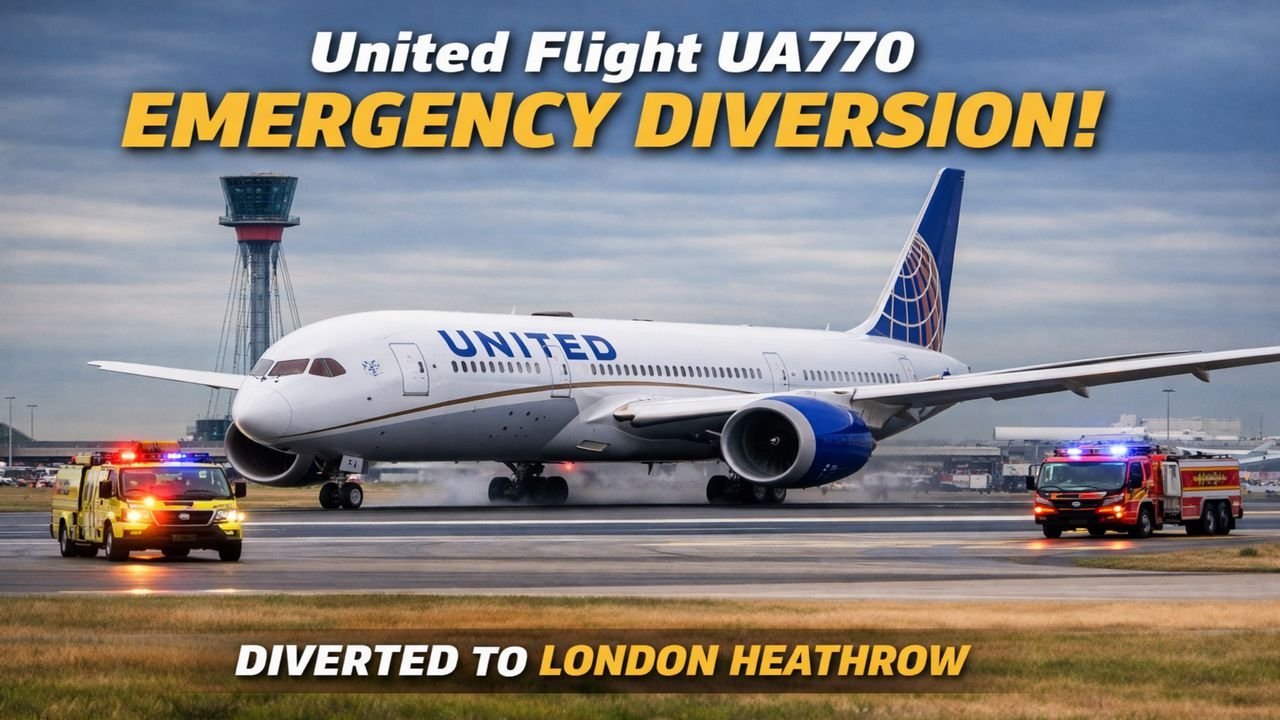
The United Airlines Flight UA770 emergency diversion caught the attention of many travelers after news spread that the flight did not continue to its original destination. When people hear the word “emergency” linked to an airplane, it often creates fear and confusion. This is understandable, especially for those who do not travel frequently. However, in aviation, the word emergency does not always mean danger. Very often, it simply means the pilots noticed something that needed to be checked on the ground instead of in the air.
United Airlines Flight UA770 was a long-distance international flight flying over the Atlantic Ocean. At such high altitudes, airplanes rely on advanced systems to keep the cabin pressurized and comfortable. If a system shows even a small warning, pilots are trained to act early. Aviation rules are very strict, and safety always comes before schedules or delays. That is why flight crews sometimes choose to divert even when passengers feel the flight is going normally.
What Happened on United Airlines Flight UA770
United Airlines Flight UA770 was flying from Europe to the United States when the crew noticed a system alert during the journey. At cruising altitude, airplanes rely on complex technology to maintain safe cabin conditions. The pilots received information suggesting that one of these systems needed attention.
After reviewing the alert, the flight crew followed standard aviation procedures. They informed air traffic control and decided that continuing the long journey was not the best option. Instead, they chose to divert the aircraft to a suitable airport where emergency services and maintenance teams were available.
The pilots also used a universal aviation emergency signal to let controllers know that the flight needed priority handling. This allowed the aircraft to land smoothly without delays. From the outside, passengers may not have noticed anything unusual, but behind the scenes, the crew was working carefully to manage the situation.
Why the Flight Was Diverted
The main reason for the United Airlines Flight UA770 emergency diversion was a technical alert related to cabin safety systems. At high altitudes, the air outside the plane is too thin for humans to breathe. Aircraft cabins are pressurized to keep everyone safe and comfortable. Any alert connected to this system is taken seriously, even if it turns out to be minor.
Rather than risk continuing for several more hours, the crew chose the safest option. Aviation rules require pilots to act early and cautiously. This does not mean the plane was unsafe, but it does mean the crew wanted engineers to inspect the aircraft on the ground.
Diversions like this are a normal part of airline operations. Airlines would rather deal with delays than take unnecessary risks. This approach has helped make air travel extremely safe over the years.
What an Emergency Diversion Means in Aviation
An emergency diversion does not automatically mean danger. In aviation, it often means that something needs checking as soon as possible. Pilots are trained to make decisions that favor safety over convenience.
There are several common reasons flights divert:
- Technical alerts that require inspection
- Medical emergencies involving passengers
- Unexpected weather conditions
- Operational or air traffic issues
In the case of UA770, the diversion was technical and precautionary. The emergency signal used by the pilots allows air traffic controllers to clear a safe path and prepare emergency teams if needed. Most of the time, these landings are calm and controlled.
Why London Heathrow Was Chosen
London Heathrow Airport was selected because it is one of the largest and best-equipped airports in the world. For international flights crossing the Atlantic, Heathrow offers strong advantages.
The airport has:
- Advanced aircraft maintenance facilities
- Experienced emergency response teams
- United Airlines staff and partner support
- Easy options for rebooking passengers
Choosing a major airport reduces complications after landing. It allows engineers to inspect the aircraft quickly and helps passengers receive assistance without long delays.
Passenger Experience During the UA770 Diversion
For passengers on United Airlines Flight UA770, the experience may have felt confusing or stressful. In most diversions, cabin crew provide calm updates without causing alarm. Many passengers only realize something unusual is happening after the plane lands.
After landing, passengers were guided through standard procedures. United Airlines staff assisted with rebooking, meals, and accommodations when necessary. While delays can be frustrating, airlines are required to support passengers during unexpected disruptions.
Many travelers later shared that the landing felt normal and controlled. This shows how well-trained flight crews are at handling these situations quietly and professionally.
Safety Outcome and Airline Response
The United Airlines Flight UA770 emergency diversion ended safely with no injuries reported. Once the aircraft was on the ground, maintenance teams began inspecting the plane to identify the exact cause of the alert.
This inspection process is thorough and can take time. Airlines do not return aircraft to service until engineers confirm everything is working correctly. United Airlines followed standard safety and customer care procedures throughout the incident.
Events like this highlight how safety systems work together, from aircraft sensors to pilot training and airport readiness.
Common Questions About United Airlines Flight UA770 Emergency Diversion
Many people wonder if diversions mean planes are unsafe. In reality, diversions are a sign that safety systems are doing their job. It is better to land early than to ignore an alert.
Passengers often ask if compensation is provided. This depends on the airline’s policy, local regulations, and the reason for the diversion. Technical issues usually qualify passengers for assistance, but not always for financial compensation.
Another common question is whether the plane can continue flying after a diversion. Sometimes it can after inspection, and sometimes passengers are moved to another aircraft. Each situation is handled differently.
Conclusion
The United Airlines Flight UA770 emergency diversion was a precautionary safety decision made by trained professionals. While the word emergency can sound frightening, this event shows how careful and prepared modern aviation truly is. The aircraft landed safely, passengers were protected, and the situation was handled according to strict safety rules.
Understanding incidents like UA770 helps travelers feel more confident about flying. Diversions are not failures. They are part of a system designed to keep people safe above all else.
Read More: Crafting a Digital Identity That Feels Real in a Visual First World
About the Author