
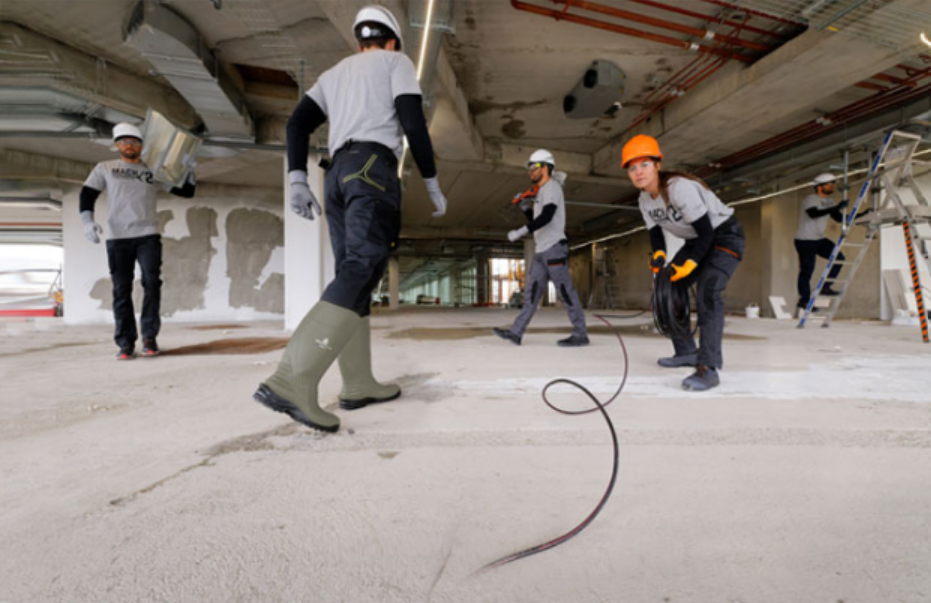
Safety is no longer a peripheral issue in the modern industries but is a strategic priority. Regulatory compliance, work efficiency, and employee well-being have led to the increased significance of personal protective solutions in various work environments. Corporations are exposed to new risks, including chemical exposures, mechanical incidents, and the strain of ergonomics and environmental hazards. These challenges cannot be solved individually, so the use of protective equipment, technology, and training in a combined manner is needed to establish a safety culture.
In that regard, embracing the level of coverage and influence of the current security solutions is an issue that innovative businesses should address.
Comprehensive Risk Assessment as the Foundation of Safety
Knowledge about the forms, occurrence, and possible effects of risks will make sure protective measures are accurate, applicable, and efficient.
● Identify Workplace Hazards: The initial process of ensuring maximum safety is a comprehensive hazard analysis. Each work setting has its own form of risks, and they may include a combination of physical effects and chemical influence, as well as repetitive tension and extreme temperatures.
● Tailored Protective Measures: Safety measures are to be tailored once the risks are determined. Stereotypical protective gear might not cover all of the threats. The advanced personal protective solutions may be chosen or developed according to the state of work, exposure level, and conditions of work.
● Continuous Monitoring and Feedback: Safety is not a static phenomenon. One of the ways to use continuous monitoring systems, i.e., with inspections, audits, and feedback loops, is to enable organizations to identify new hazards and modify the protective measures. The workplace atmosphere should be built where workers are made to report unsafe working conditions or equipment problems, and this initiative should encourage a culture of collective responsibility.
Advanced Protective Equipment: Beyond Traditional Gear
Modern devices are being designed to incorporate an ergonomic design, special materials, and intelligent technology to offer active, dependable security in a wide range of working conditions.
● Ergonomic and Comfortable Designs: The current protective equipment is more focused on ergonomics, which minimizes fatigue and strains on long shifts. Relaxing designs promote compliance and enable employees to remain productive without the need to compromise safety.
● Integration of Smart Technology: The Wearable sensors will be able to monitor the environment, follow the exposure to chemicals, identify falls, and record the vital signs in near real-time. This is a proactive approach to data-driven defense to help organizations prevent the development of incidents before they get out of control, and protective equipment becomes an active part of workplace safety and is not a one-dimensional barrier.
● Durable and Specialized Materials: Special materials are used in order to increase the life cycle and capability in extreme environments. Flame-retardant fabrics, chemically resistant polymers, and impact-absorbing composites increase the lifecycle of the protective solutions and do not compromise the safety standards.
Comprehensive Training and Safety Education Programs
Well-organized training sessions and continuous safety education can ensure that employees know how to implement protective solutions in such a way that they lead to minimal incidents and create a culture of responsibility.
● Skill-Based Usage Training: When employees are aware of how to utilize protective equipment, they only help to protect themselves. The technological training programs are centered on how to wear, put in, repair, and store equipment.
● Risk Awareness and Behavioral Safety: Going beyond equipment safety education. Workers are supposed to know the possible risks and the contribution of their activities to the exposure to risks. The behavioral safety programs focus on stress, making decisions, situational awareness, and hazard recognition.
● Integration of Safety into Daily Operations: Incorporation of safety in daily operations is an effective way of ensuring compliance. Correct utilization of protective solutions can be reinforced with the help of checklists, reminders, and digital control.
Leveraging Technology for Predictive Safety
Digital systems and sensor-based systems enable organizations to predict risks before they get out of hand.
● Environmental Monitoring Systems: Developed sensor networks and IoT-enabled devices have the potential to track the conditions of temperature, air quality, noise, and chemical levels. These systems display real-time notifications in case of a violation of environmental limits, and employees are able to take immediate safety measures.
● Data Analytics for Risk Prevention: An organization is able to utilize collected safety data to determine trends and forecast possible hazards. Anticipatory learning allows choosing the optimal course of action by making changes to safety mechanisms in advance and placing the use of individual protective measures where they are most appropriate.
● Digital Compliance and Maintenance Tracking: Schedules of maintenance and replacement are the mandatory steps to equipment reliability. Digital tracking systems help managers to remind them when gear needs to be inspected or replaced so that the protective solutions do not go out of commission.
Sustainability and Long-Term Strategic Value of Protective Solutions
The long-term value of investing in sustainable and environmentally-friendly protection. These actions, in addition to short-term safety, strengthen corporate responsibility, minimize expenses, and shape a workplace culture.
● Eco-Friendly and Recyclable Materials: The contemporary protective solutions are becoming environmentally-friendly and sustainable. Fabrics can be recycled, and biodegradable parts or energy-efficient production decrease environmental impact. Such organizations can achieve the advantage of ensuring workplace well-being with a wider corporate responsibility agenda.
● Cost-Effectiveness Through Durability: Led to lasting longer, the quality of equipment used reduces the costs of replacement. Long-term solutions are resistant to tough use without losing their safety, and can provide a quantifiable ROI. A balance between sustainability and durability will guarantee a balance between operational efficiency and environmental accountability.
● Cultural and Strategic Impact: The long-term implementation of the most sophisticated protective solutions will contribute to the establishment of a safety culture, in which the employees will realize that their well-being is a strategic priority. Companies that have robust cultures of safety have increased retention rates, morale, and have a higher consistency in operations.
Conclusion
The maximization of safety in the workplace is not mere compliance but rather an integrated, holistic approach of high-level personal protective solutions, training of employees, and technology development. Companies that invest in the specific equipment, ongoing training, and proactive monitoring develop an environment in which safety is the productivity and strength.
To those enterprises that require a professional consultation and new protective equipment that would help to address the emerging requirements of contemporary workplaces, Delta Plus will offer access to both convenient and progressive solutions.
About the Author